

















What the British Tourist Arrest
Tells Us About American Civil Rights
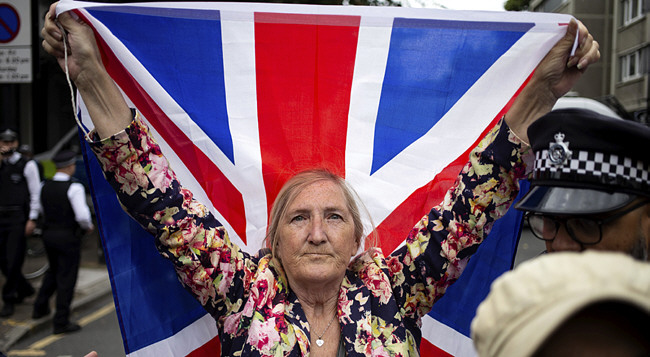
Photo by Christopher Walls / SOPA Images/Sipa USA (Sipa via AP Images)
By Chris McNutt ♦ December 12, 2025
Data Source
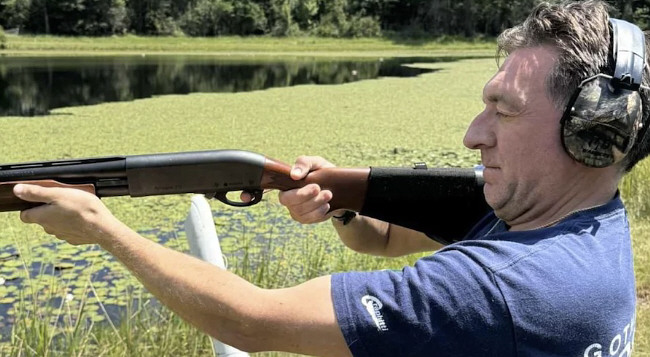
When Jon Richelieu-Booth boarded a plane home to England after a Florida vacation, he had no reason to believe a simple photo — a harmless picture of himself shooting a legally rented shotgun at a gun range — would soon turn his life upside down.
But within days of posting that photo on LinkedIn, British police were at his door. Not once, not twice, but repeatedly, arresting him, seizing his electronics, and dragging him through 13 weeks of legal hell.
His supposed crime? "Possessing a firearm with intent to cause fear of violence." The evidence? A smiling vacation snapshot taken thousands of miles away, in a country where the activity was not only legal but normal.
This episode would be absurd if it weren't so chilling. It reveals a truth Americans often forget: in most of the world, your rights exist only until the government decides otherwise. In the United Kingdom, there is no Second Amendment. There is no constitutional guarantee of free speech. There is no foundational belief that the people — not the government — are the ultimate sovereign.
So when a middle-aged IT consultant posts a picture holding a legal firearm in another country, the British state feels fully entitled to kick in the door, confiscate his property, invent criminal charges, and destroy a man's peace — simply because they don't like the image.
That can't happen here. And it must never be allowed to happen here.
The Unmatched Power of America's First and Second Amendments
America is exceptional not because of its economy, geography, or its history, but because of two paired principles that exist nowhere else in the world with such clarity:
1. The First Amendment — You may speak the truth without fear.
Americans can criticize their leaders, mock the ruling class, hold opinions that are unpopular with bureaucrats, and defend beliefs that elites despise. Speech isn't a government-issued privilege. It is a pre-existing right.
2. The Second Amendment — You may defend your life and liberty with arms.
The Founders understood a timeless truth: Speech without the ability to defend it becomes merely a suggestion. They recognized that governments, by nature, accumulate power and only an armed citizenry can impose limits when all else fails.
Together, these two amendments form the backbone of American freedom. They're the twin pillars that protect every other right. And they're the reason stories like Richelieu-Booth's still shock us — because deep down, Americans instinctively reject the idea that a government may arrest a man over a photo.
The British Case Isn't a Fluke, It Is a Warning
What happened to Richelieu-Booth isn't an accident or an overreach. It's the predictable result of a disarmed, dependent society where rights are granted from above instead of recognized as inherent.
A state that can criminalize a vacation photo can criminalize anything. A state that can seize your devices because of a smiling snapshot can seize your livelihood. A state that can imprison you for causing "fear" can imprison anyone who offends fashionable political sensibilities.
This is what happens when the government is the arbiter of freedom. And this is precisely what the Founders sought to prevent.
Why We Must Fight Relentlessly To Preserve Our Liberties
Every day in America, powerful forces try to chip away at the First and Second Amendments:
• "Hate speech" laws that mimic Britain
• "Red flag" confiscations without due process
• Censorship disguised as "misinformation" control
• Back door registration schemes
• Bans on commonly-owned firearms
• Prosecutors targeting people for their political views
The message is always the same: give up a little freedom now…we promise it's for your own good. Richelieu-Booth's arrest shows exactly where that road leads.
The truth is simple: freedom dies gradually… until it dies suddenly. That's why the fight for the Second Amendment isn't just about guns. It's about the entire structure of American liberty. It's about ensuring that no government — federal, state, local, or foreign — can do to an American what British authorities did to that IT consultant.
Our rights are exceptional. They are fragile. And they survive only when the people refuse to surrender them.
If we want our children and grandchildren to inherit a free nation — a nation where a photo of a gun is just a photo — then we must fight harder than ever to protect the liberties that make America the last stronghold of individual freedom. Because what happened in England must never become normal here.
Chris McNutt is president of Texas Gun Rights.
